About
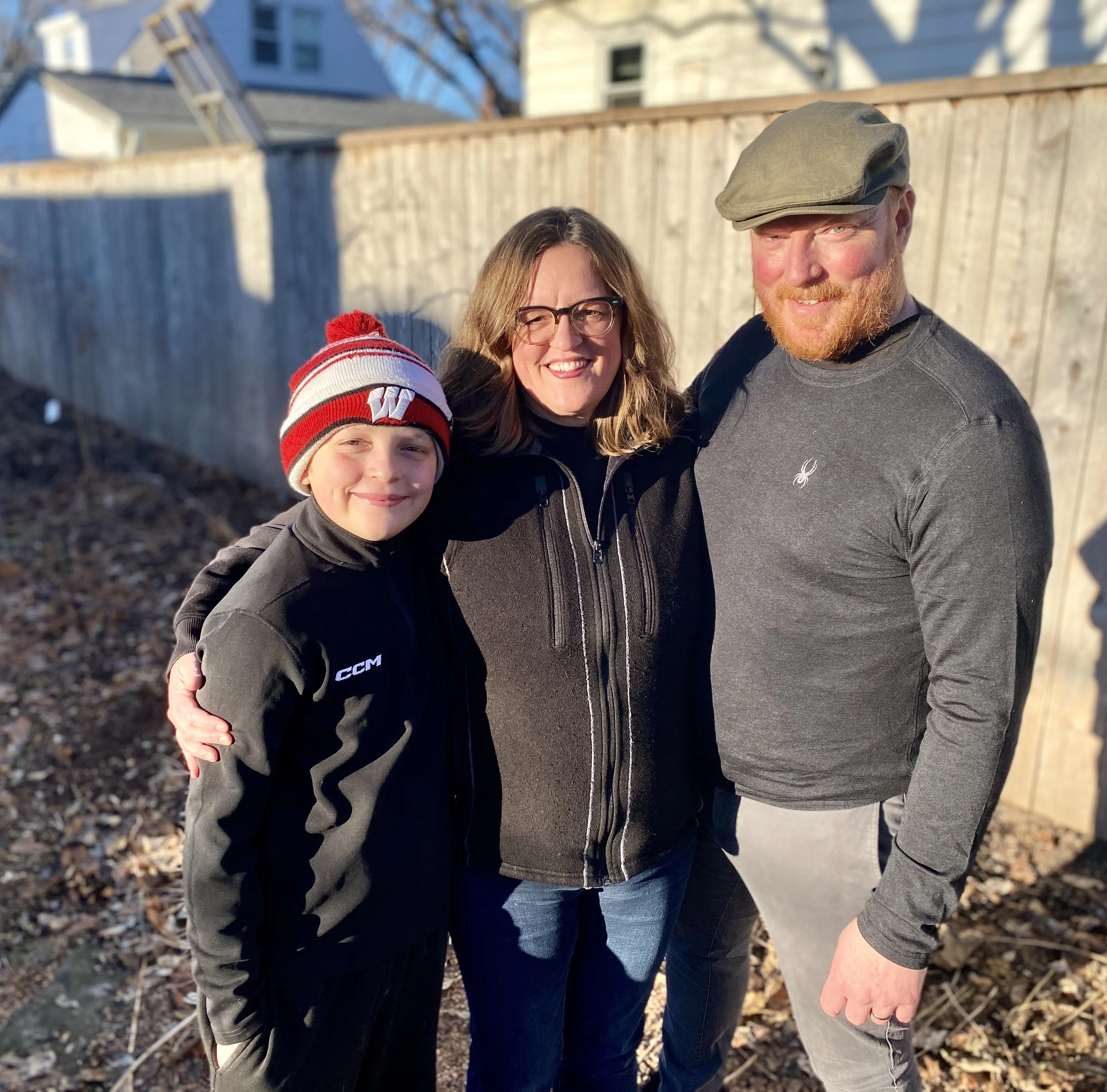
Heidi, her husband P.T., and their son Lincoln, make their home on the near east side of Madison. Professionally and as a volunteer, Heidi has worked tirelessly to improve our community and make sure that all residents are treated fairly and with respect. For 20 years, she has worked as a public interest attorney representing low-income tenants in eviction cases and subsidized housing disputes. She is the bargaining unit co-chair for the United Legal Workers, National Organization of Legal Services Workers, UAW 2320. Heidi has coached recreational, club, and high school varsity soccer, been a delegate to the South Central Federation of Labor, and served on the Boards of Tenant Resource Center, the Public Interest Law Section of the State Bar of Wisconsin, the Madison chapter of the National Lawyers Guild, and the Emerson East Neighborhood Association.
Heidi received her B.A. from UW-Madison in 2001, where she played four years of varsity women's soccer, double-majored in Political Science and Women's Studies, and earned a certificate in American Indian Studies. Heidi received her J.D. from the University of St. Thomas School of Law in 2005, where she won the Dean's Award for Jurisprudence and represented immigrants in removal proceedings as a clinical legal services student.
Heidi currently chairs the Health and Human Needs (HHN) Committee, which oversees the county’s largest department - Human Services. She also serves on the Board of the Area Agency on Aging, HHN’s Opioid Settlement Subcommittee and the Personnel & Finance Committee’s Tax Deed Subcommittee. She has previously served on the Zoning and Land Regulation Committee, Long Term Support Committee, City-County Homeless Issues Committee, Human Services Board, Equal Opportunities Commission, Specialized Transportation Commission, Comprehensive Plan Steering Committee, Poverty Commission, and the City of Madison’s City-County School Collaborative Committee.
Heidi has authored and advocated for legislation and funding to: expand local fair housing protections, recognize housing as a human right, pursue fare-free transit, develop a climate action plan, maintain living wage and union jobs, ensure due process in accessing emergency shelter, require eviction reports from County funded housing and homeless services providers, require lactation rooms and free menstrual products in county buildings, amend county rules to enhance transparency and expand public comment opportunities at county meetings, establish a comprehensive homeless day resource center, and increase funding for shelter services and affordable housing, through expansion of the Affordable Housing Development Fund and creation of the Fair Chance Housing Fund and the Safe Farmworker Housing Initiative. Her leadership in the 2026 county budget process reduced cuts to human services programs, restored positions for aging and disability and immigration affairs services, and added positions to increase access to behavioral health supports.